When the pain runs down your leg
Sciatica: What Helps When the Pain Runs Down Your Leg?
Three things help most with sciatica: staying gently active instead of taking to your bed, easing the load on your back in everyday life – and finding out why the nerve is irritated in the first place. The good news: for many people, sciatica improves noticeably within a few weeks, especially when they take the right steps early on.
In short: Sciatica is not a condition in itself but a sign that the sciatic nerve is irritated – often by strain in the lower back or pelvis. Gentle movement, warmth and a mindful daily routine help. Chiropractic care can support you by easing the load on your spine, pelvis and nervous system – ideally combined with targeted exercises.
In this article you will learn what sciatica actually is, what can help right now, where it comes from – and how we guide you back into movement, step by step, at Vital Chiropraktik in Vienna.
What Is Sciatica, Exactly?
The sciatic nerve is the longest and thickest nerve in your body. It forms from several nerve roots in your lower back and runs through your buttock and the back of your thigh all the way down to your foot. If it gets irritated or compressed anywhere along this path, you often feel it far away from where the problem actually starts.
Typical signs of sciatica are:
- A pulling or burning pain that radiates from your lower back or buttock into your leg – usually on one side only
- Tingling or numbness in your leg or foot, like “pins and needles”
- Pain that gets worse when sitting, coughing or sneezing
- A feeling of heaviness or weakness in your leg
Sometimes the leg pain is even stronger than the back pain itself – a clear sign of how much your nervous system is involved.
What Helps With Sciatica Right Now?
When the pain shoots down your leg, the first instinct is often to lie down and stop moving. But your body usually recovers faster when you stay gently active. These things help many people:
- Short, frequent walks: walking for ten minutes several times a day is better than sitting or lying for hours. Movement boosts circulation and calms the irritated nerve.
- The step position: lie on your back and rest your lower legs on a chair or sofa so that your hips and knees are at roughly right angles. This takes pressure off your lower back.
- Warmth: a hot water bottle or a warm bath relaxes the muscles in your back and buttocks.
- Avoid sitting for long: stand up briefly every 20–30 minutes. When you do sit, sit upright with both feet on the floor.
- No heavy lifting: give your back a few days’ break from heavy loads and sudden twisting movements.
- Breathe calmly: pain makes you tense up. Slow, deep breaths into your belly help your nervous system let go.
These steps bring relief in the moment. To keep the pain from coming back, though, it is worth finding the cause.
Where Does Sciatica Come From?
The sciatic nerve rarely gets irritated “just like that”. Often a disc is pressing on a nerve root, a tight muscle deep in the buttock (the piriformis) is involved, or the pelvis has lost its balance. Usually, though, it is a mix of different loads – in chiropractic we speak of three kinds of stress:
- Physical stress: long hours of sitting, too little movement, lifting the wrong way, one-sided strain at work or in sport, pregnancy or a fall onto your bottom.
- Chemical stress: too little water, an unbalanced diet, smoking – all of this can affect how well your discs and tissues are nourished.
- Emotional stress: pressure, worries and too little rest keep your muscles tense – and make you more sensitive to pain.
When these loads add up, subluxations often develop in the lower back or pelvis – spots where movement and communication with your nervous system no longer flow freely. You can read more in our article What Is Subluxation?.
How Chiropractic Care Can Help With Sciatica
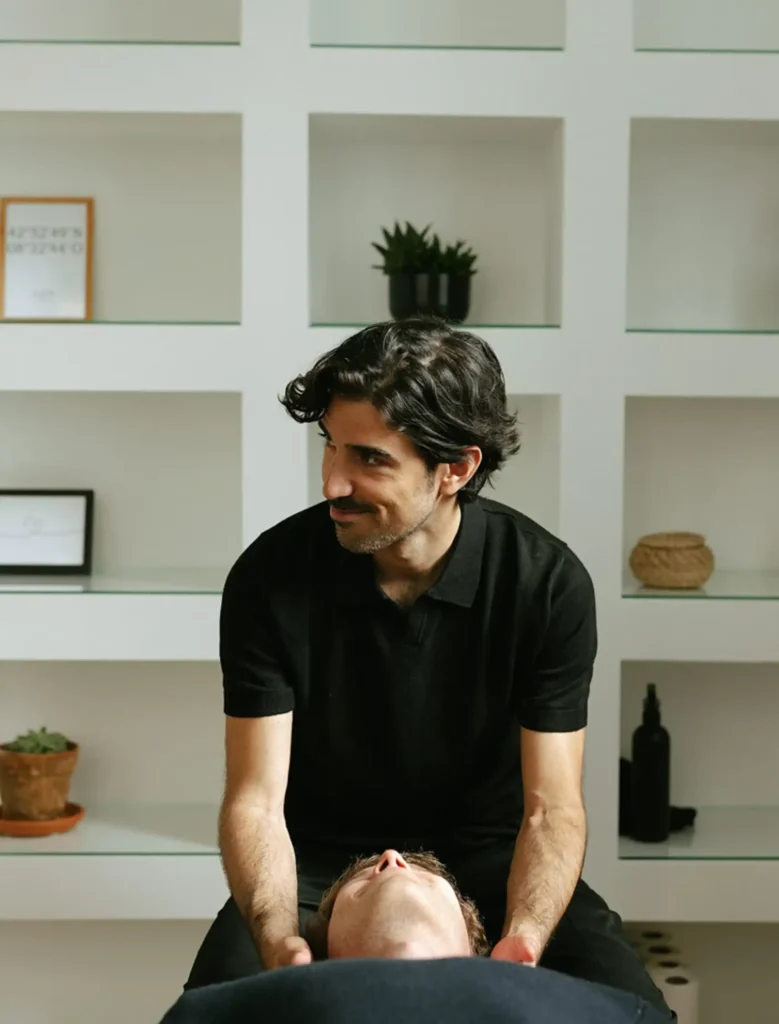
As chiropractors, we don’t just look at where it hurts – we look at the whole path of the nerve: lumbar spine, sacrum, pelvis and hips. The key often lies where movement is restricted and the nerve comes under tension as a result.
With gentle, precise adjustments we release subluxations and ease the load on your spine, pelvis and nervous system. Your body gets the space it needs to do what it does best: regulate and heal itself.
Research supports this approach too: a systematic review found moderate-quality evidence that spinal adjustments are effective for acute radiating back pain. And the UK NICE guideline recommends considering manual therapy for low back pain with or without sciatica, alongside exercise.
At Vital Chiropraktik on Stubenring, this is how we work:
- Getting to know you: at your first visit (45 minutes) we listen and examine you thoroughly – posture, mobility, muscle tone, reflexes and nerve function. This is how we find out where your symptoms come from.
- Gentle adjustments: depending on what you need, we work with our hands or with especially gentle methods such as the Activator Method, Thompson Technique or Sacro-Occipital Technique, which is particularly well suited to the pelvis.
- Support in everyday life: we show you simple exercises and positions that take pressure off your back, and we guide you back to the movement you love.
How often visits make sense depends on you and your body – read more in How Often Should You See a Chiropractor?.
What You Can Do to Keep Sciatica From Coming Back
Your daily routine has a big influence on how your back feels. These habits often make a noticeable difference:
- Move every day: walking, swimming or cycling keep your spine mobile and your discs well nourished.
- Break up long sitting: stand up every 30–45 minutes, take a few steps, stretch.
- Lift with your legs: bend your knees, keep the load close to your body and avoid twisting while holding something heavy.
- Strengthen your core: strong abdominal and back muscles give your spine support.
- Gently stretch your buttocks and hamstrings: a relaxed piriformis and flexible hamstrings take tension off the nerve.
- Sleep relaxed: lying on your side with a pillow between your knees keeps your pelvis in a calm position.
- Allow yourself rest: less stress means less muscle tension – and a calmer nervous system.
If your back tends to lock up suddenly and sharply, you will find more tips in our article Sudden Lower Back Pain: What Really Helps?.
Frequently Asked Questions (FAQ)
How long does sciatica last?
It varies a lot. For many people, symptoms improve noticeably within a few weeks. If they last longer or keep coming back, it is worth having the cause checked thoroughly.
Should I rest when I have sciatica?
Not completely. Gentle movement within your limits is usually better than bed rest. But avoid heavy lifting and anything that clearly makes the pain worse.
Does warmth or cold help more with sciatica?
Many people find warmth soothing because it relaxes the muscles. Try what feels better for you.
Can a chiropractor help with a herniated disc?
With many disc problems, yes. We examine you thoroughly, work especially gently – for example with the Activator Method or Thompson Technique – and coordinate with your doctor when needed.
When should I see a doctor straight away?
If you notice numbness in your genital or buttock area, have problems passing urine or controlling your bowels, or your leg suddenly becomes much weaker, please see a doctor immediately.
Can sciatica happen during pregnancy?
Yes, it is quite common, because your pelvis and posture change. You can read how we gently support pregnant women in our article Chiropractic Care During Pregnancy.
Step by step, back into movement.
Have your back, pelvis and nervous system examined thoroughly and find out what is behind your symptoms. Book your first visit at Vital Chiropraktik on Stubenring.
Doctor of Chiropractic
at Vital Chiropraktik
Mario Olarte
I am the Lead Chiropractor at Vital Chiropraktik in Vienna, specializing in non-invasive spine care and nervous system health. With years of clinical experience, they are dedicated to helping patients
Doctor of Chiropractic
at Vital Chiropraktik
Mario Olarte
Sources
- Leininger B. et al. (2011): Spinal manipulation or mobilization for radiculopathy: a systematic review. Physical Medicine and Rehabilitation Clinics of North America.
- National Institute for Health and Care Excellence (NICE): Low back pain and sciatica in over 16s: assessment and management (NG59).
Reviewed by Mario Olarte, Doctor of Chiropractic.
Note: This article is for general information only and does not replace a personal examination, diagnosis or treatment. If your symptoms are severe, unusual or persistent, please see a doctor.